Gruyère vs Emmental: What’s the Difference?
Both are firm, pale-yellow Swiss cheeses, both melt beautifully, and both are famous for their holes. So why does one cost more, and why do chefs reach for Gruyère when Emmental will do? The answer comes down to flavour, ageing and the holes themselves.
The short answer
Gruyère is richer, nuttier and more savoury; Emmental is milder, more elastic and has bigger holes. Gruyère is the connoisseur’s choice; Emmental is the approachable, versatile workhorse.
Gruyère
Gruyère is a firm, pressed cow’s milk cheese from the Fribourg region of Switzerland, aged a minimum of several months and often much longer. As it ages, it develops a complex, nutty, faintly sweet savouriness with a slightly grainy texture. It has few or no holes — a real Gruyère is not full of eyes. It is a protected Swiss designation.
Emmental
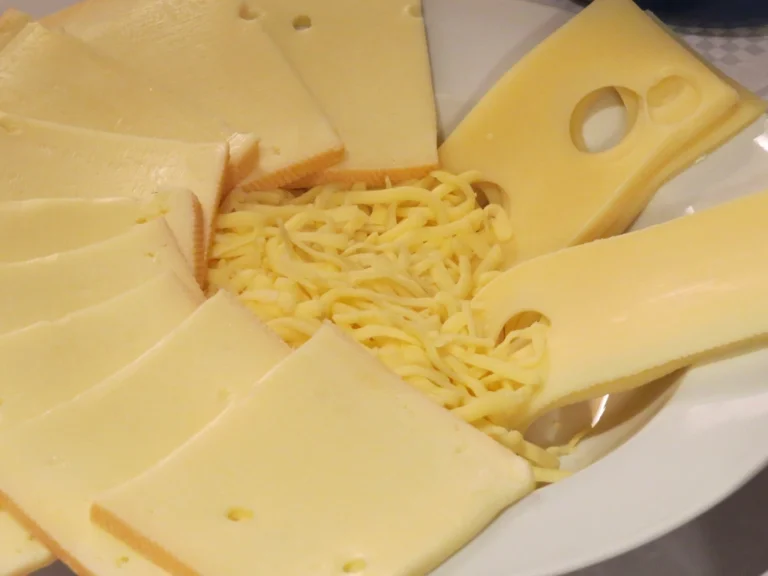
Emmental (often “Emmentaler”) is the classic holey Swiss cheese. It is milder, sweeter and more elastic, with a distinctive flavour that comes from the cultures that produce its large holes (called “eyes”). It melts into long strings, which makes it a favourite for gratins and sandwiches.
The holes explained
The holes in Emmental are formed by carbon dioxide released by bacteria during ripening — the gas collects in pockets in the curd. Gruyère’s production and ageing generally produce few or no eyes. So counter-intuitively, the cheese with the biggest holes is the milder one.
Flavour and ageing compared
- Gruyère: nutty, savoury, sometimes slightly earthy and caramelised with age; can develop crystals when old
- Emmental: mild, sweet, nutty, fruity, with a rubbery-elastic bite
How to use each
- Gruyère: the star of fondue and onion soup, excellent grated into sauces, superb on a board when aged
- Emmental: sandwiches, gratins, melting, ham and cheese toasties, mild dishes that need stretchy melt
When a recipe calls for Gruyère and you only have Emmental, the dish will still work — but it will be milder. When it calls for Emmental and you have Gruyère, the dish will be richer.
Frequently asked questions
Is Gruyère always holey-free?
Traditionally Gruyère has few or no holes. Some mass-produced versions add them for appearance, but they are not characteristic of the real cheese.
Which is better for fondue?
Gruyère, usually in a blend with Vacherin or Emmental. Its nuttiness carries the dish.
Are these cheeses vegetarian?
Traditional Swiss cheeses use animal rennet. Check labels for vegetarian alternatives.
Explore more cheese families, or try Comté — Gruyère’s French cousin.