How to Make Mozzarella at Home
Fresh mozzarella made in your own kitchen, still warm, salty and milky, is one of the great small satisfactions of cooking. It is also surprisingly quick: with milk, citric acid and rennet, you can go from fridge to stretched ball of cheese in about an hour.
What makes mozzarella special
Mozzarella is a pasta filata cheese — an Italian term meaning the curd is stretched and pulled in hot water. That stretching aligns the protein fibres, which is what gives mozzarella its characteristic stringy, elastic texture.
What you need
- 4 litres (1 gallon) non-homogenised or standard whole milk — avoid ultra-pasteurised (UHT), which will not set
- 1.5 teaspoons citric acid dissolved in a little cool water
- 1/4 teaspoon liquid rennet diluted in 60 ml cool water
- Cheese salt or non-iodised salt for the brine
- A thermometer, a large stainless pot, a slotted spoon or ladle, and a colander
Method
- Pour the milk into the pot, add the citric acid solution and heat slowly to 32°C / 90°F, stirring gently.
- Add the diluted rennet, stir for 30 seconds, then still the milk and leave it covered for about 5 minutes, until it sets into a soft gel.
- Cut the curd into roughly 2 cm cubes with a long knife.
- Gently heat to 41°C / 105°F, stirring slowly, until the curds and whey separate.
- Pour into a colander, drain, and press gently to gather the curds.
- Heat the curds: either microwave them in short bursts or pour near-boiling water over them, until they reach about 60°C / 140°F and become pliable.
- Stretch and fold the hot curd repeatedly until it is smooth and glossy, then form into balls.
- Drop into cold salted brine and chill.
Why it sometimes fails
- UHT milk — does not set; use fresh whole milk
- Overheated curd — turns tough and rubbery; keep the stretch water around 60°C
- Too much rennet — bitter taste; measure carefully
The milk is the biggest variable. Non-homogenised milk gives the most tender results, but shop-bought whole milk works well too.
Eat it fresh
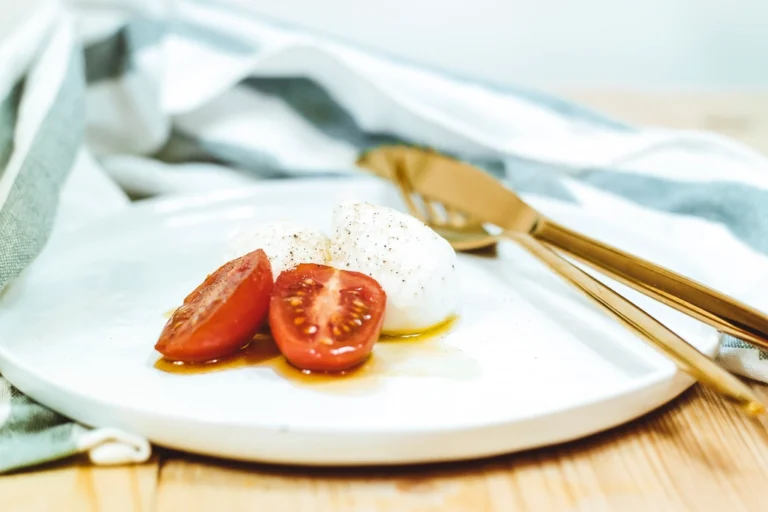
Homemade mozzarella is at its best within a day — perfect with tomatoes, basil and olive oil, or on a pizza or pasta bake. Compare it with shop-bought in our burrata vs mozzarella guide.