How to Make Paneer at Home
Paneer is the easiest cheese there is: no rennet, no cultures, no ageing, no temperature to worry about beyond a gentle simmer. It is a firm, fresh, milky cheese that holds its shape when cooked, which is why it stars in Indian dishes from palak paneer to paneer tikka. Making it takes half an hour.
What paneer is
Paneer is an acid-set, unaged cheese made from cow’s or buffalo milk. Because it is not aged and contains no rennet, it is firm yet slightly soft, mild and non-melting — on the grill or in a hot pan it browns and holds rather than sagging.
Ingredients
- 2 litres whole milk
- 3–4 tablespoons lemon juice or white vinegar, mixed with an equal amount of water
- 1 teaspoon salt (optional)
Method
- Heat the milk in a heavy pot to just below boiling, stirring so it does not catch.
- Add the acid a spoonful at a time, stirring gently, until the milk separates into curds and greenish whey. Stop adding as soon as it does.
- Let it stand for 5 minutes, then pour into a colander lined with muslin.
- Rinse the curds under cool water to remove any lemon or vinegar taste.
- Gather the muslin and squeeze out the excess whey, then twist tightly.
- Press the bundle under a heavy weight — a filled pot or a stack of tins — for 30 minutes to an hour.
- Unwrap and cut into cubes. Use within a few days, or freeze immersed in water.
Getting it firm enough
The pressing time decides the texture. Fifteen minutes gives a soft paneer; an hour gives a firm block that cubes neatly. If your paneer crumbles when you cook it, press it longer next time and squeeze more whey out before pressing.
Cooking with paneer
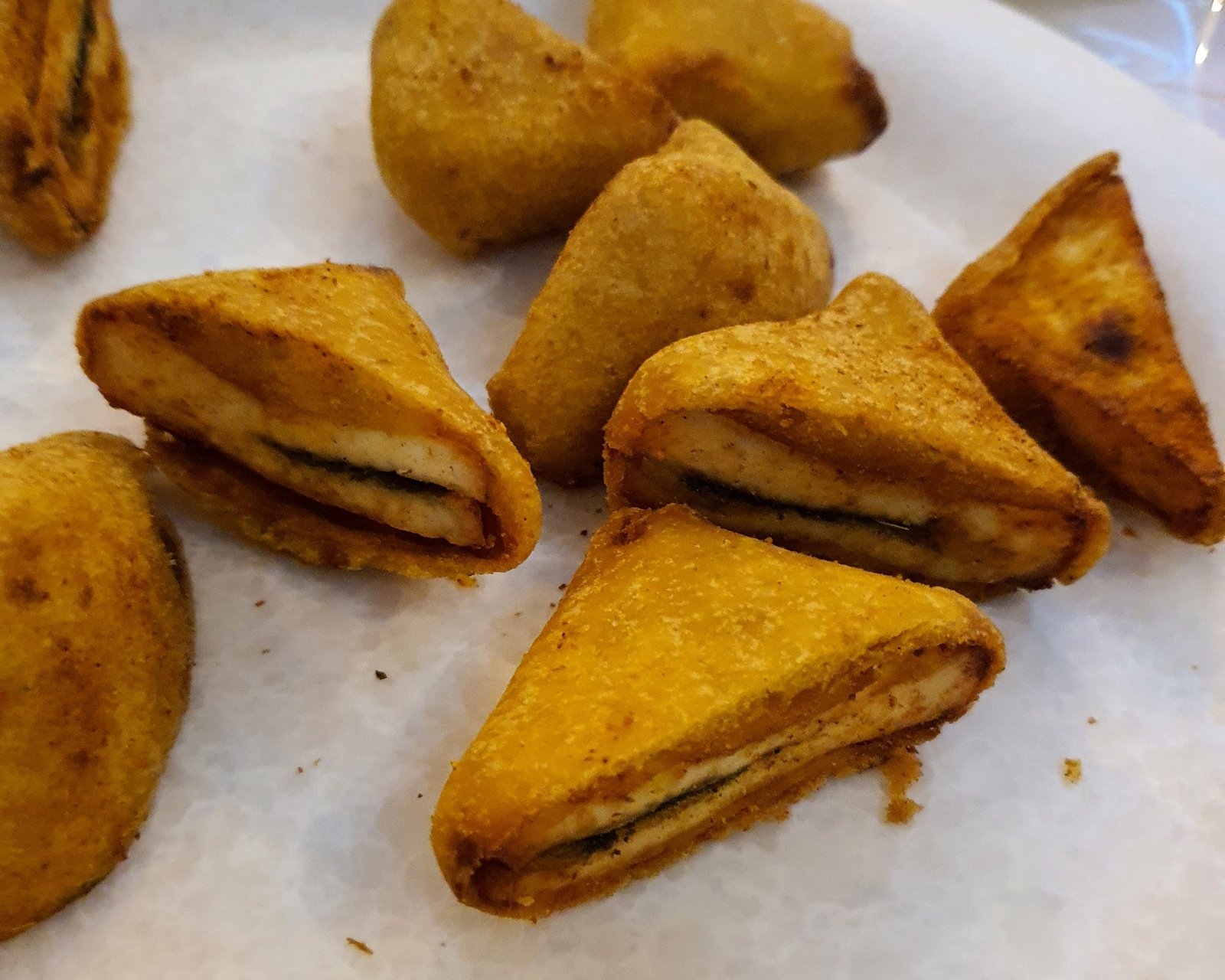
Because it does not melt, paneer is best browned in a little oil or ghee first, then added to a sauce, or marinated and grilled. It is also excellent crumbled into a salad, echoing feta. For a similar fresh cheese, see our feta guide and ricotta recipe.